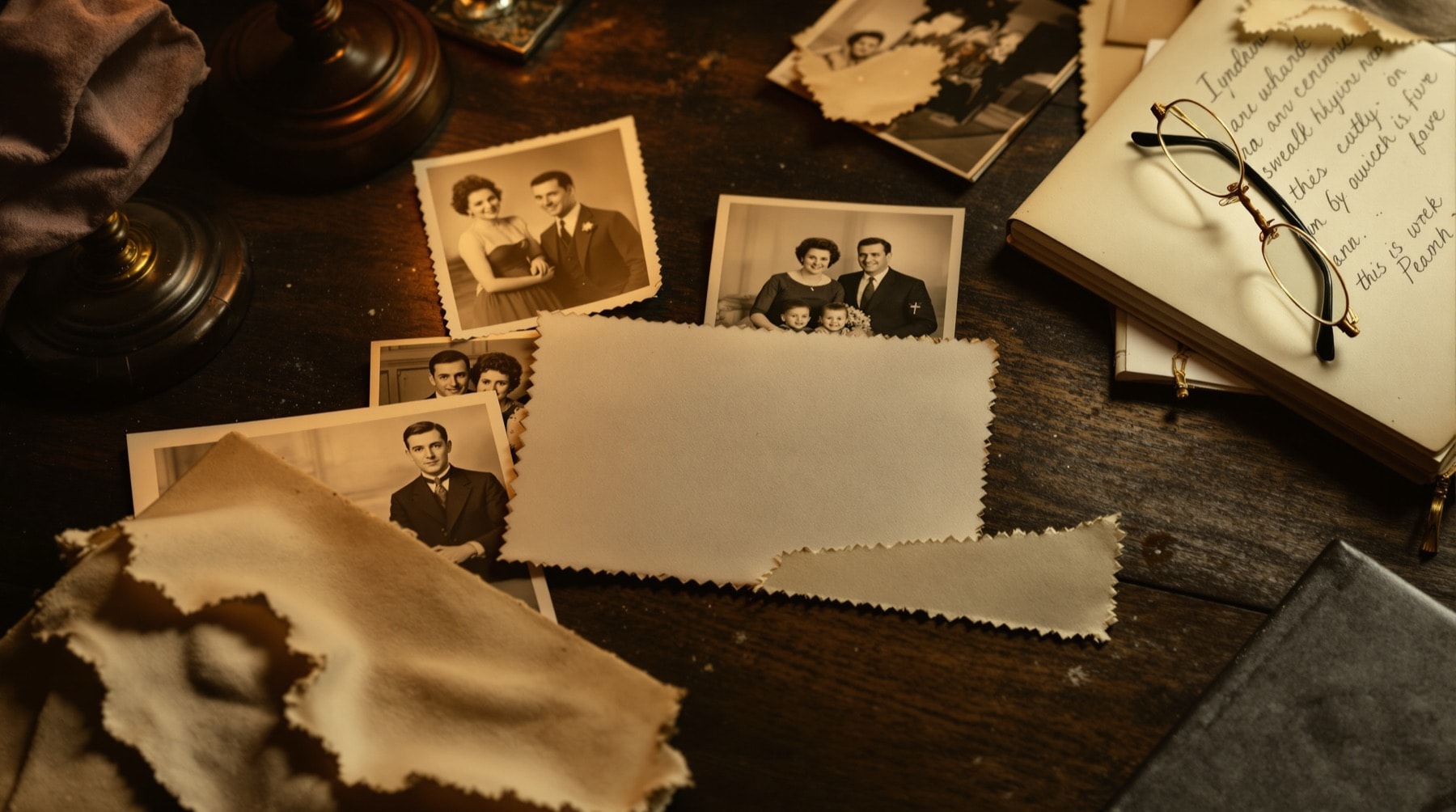
Life-writing is the most commonly attempted and least often finished form of non-fiction, and the reason is nearly always the same: it is approached as an act of remembering rather than an act of selection. A life is not a book. A book is what you cut a life down to.
Memoir, autobiography, family history
These are three different projects and choosing between them early saves a great deal of grief.
- Autobiography runs the length of a life, in order, and is judged on completeness. It is the hardest to make readable and the easiest to research, because you were there.
- Memoir takes one thread — an illness, a trade, a decade, a relationship, a migration — and follows only that. It is the most readable form and the one most first-time life-writers should choose.
- Family history is a research project with narrative attached. Its value grows with the quality of its sourcing rather than the quality of its prose, and it survives in libraries and archives long after the writing is forgotten.
Find the spine
The spine is the single question the book answers. Not "what happened to me" but something specific enough to leave things out: how a family lost and rebuilt a business; what forty years in a disappearing trade taught someone; what it took to leave. Once the spine exists, the hardest editorial question — does this belong? — becomes answerable, which is the whole reason to have one.
A useful exercise: list twenty episodes you know must be in the book. Then ask, of each, which one does the spine actually require. Most lists shed half. What remains is the book, and the rest is an appendix, another book, or a good story you tell in person.
Scene beats summary, but not everywhere
Summary tells the reader what happened. Scene puts them in a room where it is happening — a place, a time, people speaking, something at stake. Scene is what makes life-writing readable, and it is also expensive: it takes far more words per unit of plot.
The working ratio in most good memoir is a small number of fully realised scenes carrying the emotional weight, connected by efficient summary doing the logistics. Deciding which episodes earn scene treatment is the central craft decision of the form. As a rule: an episode earns a scene if the reader's understanding changes during it.
Style is specificity, not decoration
"Style" in life-writing is not ornament. It is the accumulation of exact things: the make of the machine, the smell of the workshop, what the ration book actually allowed, the phrase your grandmother used that nobody else did. Generic writing about a specific life is the characteristic failure of the form, and it is nearly always caused by writing from memory of a memory rather than going back to the material.
Concrete nouns and plain verbs do more work here than adjectives. If you find a paragraph is not landing, the fix is almost never a better adjective; it is one more real detail.
Other people are in your book
This is the part that separates life-writing from every other kind of non-fiction, and it deserves care rather than a rule of thumb.
- Living people can be harmed by accuracy as well as by error. A true account of someone's worst year is still an account they did not choose to publish. Deciding whose consent you want is an ethical decision before it is a legal one.
- Legal exposure is real and jurisdiction-specific. Defamation and privacy law differ substantially between countries and, in the United States, between states. This page cannot advise you and does not try to; if living people appear in an unflattering light, that is a question for a lawyer before publication, not after.
- Private material is not automatically yours to publish. Letters and photographs raise copyright questions that are frequently the opposite of what people assume — the writer of a letter, not its recipient, generally holds the copyright in it. The Copyright Office's general FAQ is a sound starting point.
- Composite and altered figures need to be declared. Merging three colleagues into one character is a legitimate technique. Not telling the reader you did it is not.
Do the archive work
Memory is confidently wrong about dates, sequence and weather. Checking is not pedantry; it is what makes a reader trust the parts nobody can check. Census records, ships' manifests, service records, local newspapers and parish registers will settle most factual disputes in a family history, and much of it is publicly accessible — the U.S. National Archives research portal is the obvious starting point for American records, and public libraries and archives hold the local material that never gets digitised.
Keep a source note for every checked fact as you go. Reconstructing them later is miserable, and family histories without them lose most of their long-term value.
Structure it like any other book
Chronology is a default, not a structure. Strong life-writing frequently opens at the moment of highest stakes and then goes back, or braids two periods, or organises around places rather than years. Whatever you choose, the chapter discipline from the rest of this reference still applies — see building chapters that keep readers reading.
Next
For getting started at all, see the first step. For the production decisions that follow a finished manuscript — particularly relevant for family histories intended to reach libraries — see self-publishing mistakes.